

Published Paper
Karst aquifers and water resource contamination in Haiti (Wampler)
Published On:
March 26, 2022
Written by:
Joshua Davis
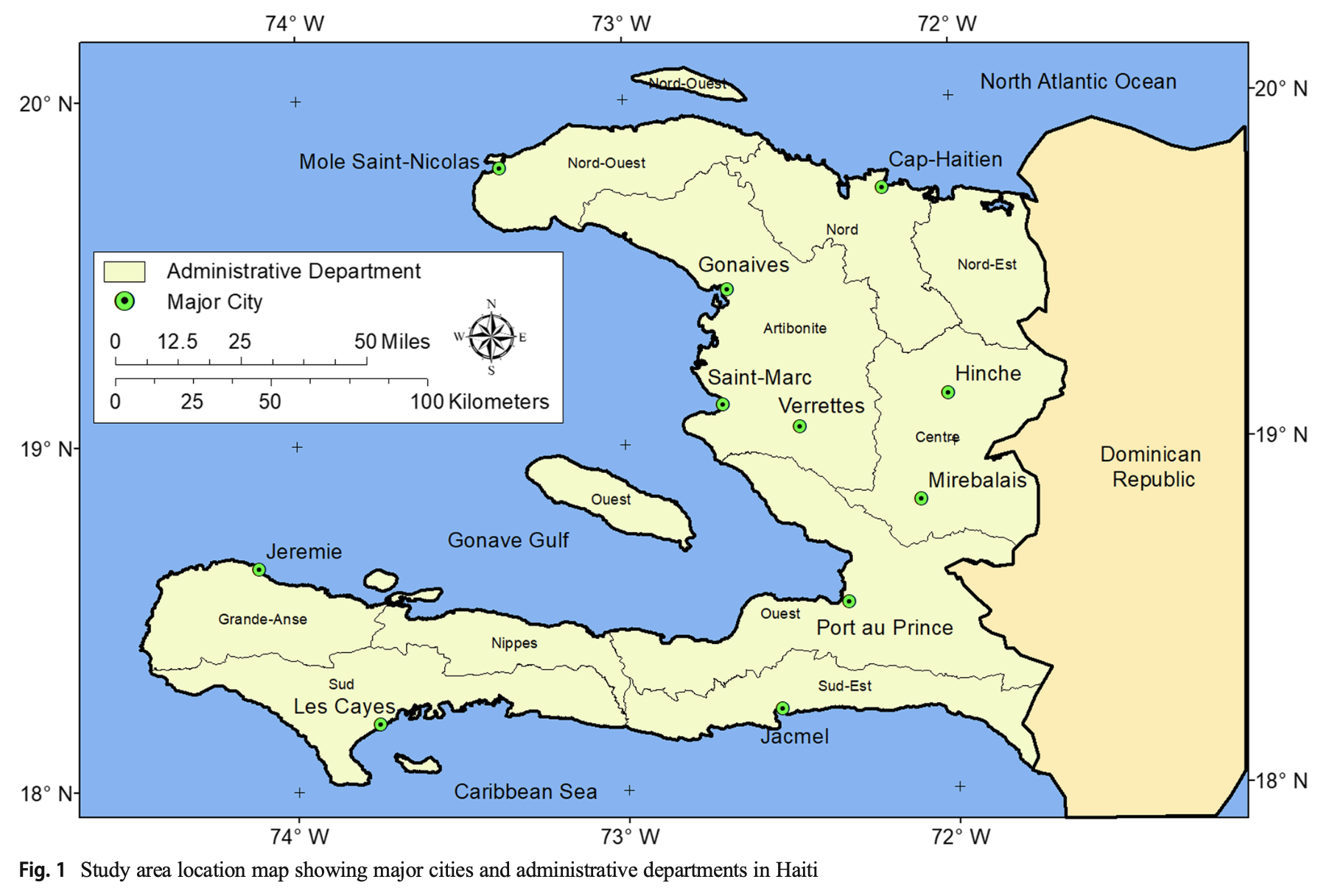
This paper by Peter J. Wampler maps out where Haiti's karst (dissolved-limestone) aquifers occur - roughly 84% of the rock exposed in Haiti is calcareous rock or alluvium - and explains why they are especially vulnerable to contamination: their fractured, cavernous rock lets surface pollutants travel quickly into groundwater with little natural filtering, especially where soil cover is thin or absent due to deforestation. The author reviews water-quality data from 9,837 water points to assess contamination extent, finding that 75% of sources in the Centre department, 55% in the Nord department, and 12% in the Ouest department are considered unsafe or high-risk by WHO standards, with inadequate sanitation and poorly sited pit latrines identified as major contributors.
It closes with a review of water treatment technologies appropriate for these vulnerable water sources.
Key Takeaway: Karst aquifers supply water to a large share of Haiti's population through springs and wells, but their contamination risk is high and highly variable by region; pairing source protection with appropriate treatment technology is essential to delivering safe drinking water from these systems.
Published online 26 March 2022 (Hydrogeology Journal 30:1453-1467); part of the "Advancements in hydrogeological knowledge of Haiti" topical collection
Keep reading this paper by downloading the PDF below.
We Support Safe Water Access
Learn more about how our team brings fresh water to others with technical excellence and integrity.
Learn More