

Published Paper
Karst aquifers and water resource contamination in Haiti (Wampler)
Publicado el:
March 26, 2022
Written by:
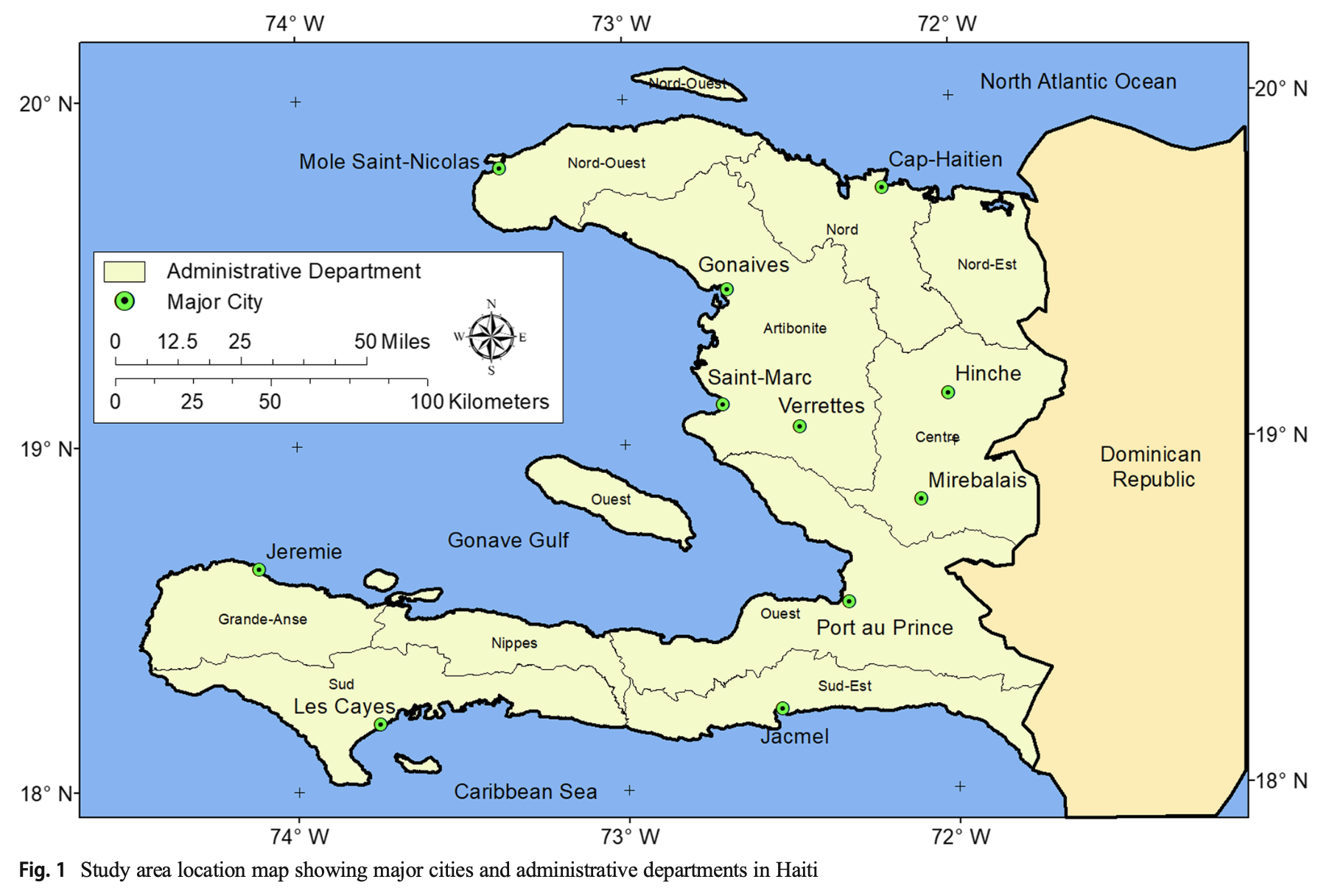
This paper by Peter J. Wampler maps out where Haiti's karst (dissolved-limestone) aquifers occur - roughly 84% of the rock exposed in Haiti is calcareous rock or alluvium - and explains why they are especially vulnerable to contamination: their fractured, cavernous rock lets surface pollutants travel quickly into groundwater with little natural filtering, especially where soil cover is thin or absent due to deforestation. The author reviews water-quality data from 9,837 water points to assess contamination extent, finding that 75% of sources in the Centre department, 55% in the Nord department, and 12% in the Ouest department are considered unsafe or high-risk by WHO standards, with inadequate sanitation and poorly sited pit latrines identified as major contributors.
It closes with a review of water treatment technologies appropriate for these vulnerable water sources.
Key Takeaway: Karst aquifers supply water to a large share of Haiti's population through springs and wells, but their contamination risk is high and highly variable by region; pairing source protection with appropriate treatment technology is essential to delivering safe drinking water from these systems.
Published online 26 March 2022 (Hydrogeology Journal 30:1453-1467); part of the "Advancements in hydrogeological knowledge of Haiti" topical collection
Keep reading this paper by downloading the PDF below.
Apoyamos el acceso a agua segura
Descubra cómo nuestro equipo lleva agua potable a otras personas con excelencia técnica e integridad.
Más información
