

Instructional
Compressor Sizing Annular Capacity
Published On:
May 22, 2026
Written by:
Fadzai Munodawafa
Introduction
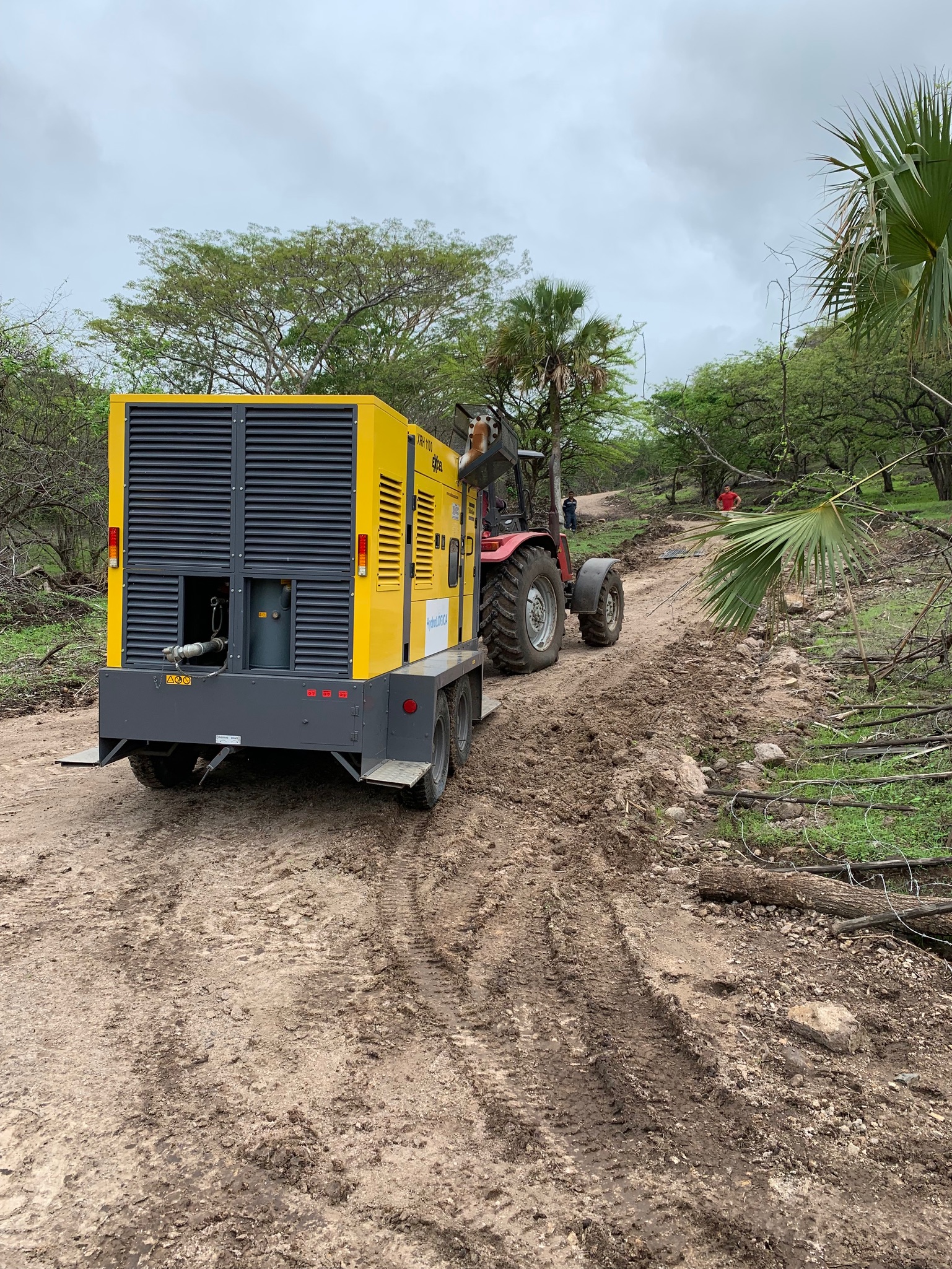
Efficient air drilling (as opposed to mud drilling) relies on the proper selection of air compressors to supply the required air volume and pressure for bit operation and cuttings removal. Despite its critical role, compressor sizing in many drilling operations is often based on equipment availability or general experience rather than technical evaluation. This practice leads to frequent mismatches between compressor capacity and operational demand; resulting in either underperformance or inefficiency.
A compressor must be adequately sized to meet all operational, technical, and safety requirements of the drilling task without being under- or over-specified.
A fit-for-purpose compressor provides sufficient air volume (CFM) and pressure (PSI/bar) to:
- Power the drilling tool (e.g., DTH hammer or rotary bit) efficiently,
- Lift and clean cuttings from the borehole at the correct up-hole velocity.
The size of an air compressor is linked to the possible borehole diameter; it is essential to the drilling process that the air travels up the hole fast enough to carry debris with it.
Air is low in density. It is also low in viscosity, having a viscosity approximately 2% that of water. A chip which will settle through water at about 0.2 m/sec (40 fpm) would settle in air at about 4 m/sec (790 fpm). Therefore, the up-hole or bailing velocity, using air for circulation, must be at least 20 times as high as the velocity required when using water.
Keep Reading by downloading this Technical Bulletin below.
We Support Safe Water Access
Learn more about how our team brings fresh water to others with technical excellence and integrity.
Learn More