

Published Paper
Challenges of Poor or Absence of Surface Sealing in Boreholes in Kenya, Tanzania and Zimbabwe
Published On:
September 22, 2026
Written by:
Fadzai Munodawafa
Groundwater provides half of Africa's drinking water, yet millions depend on boreholes that lack proper surface seals, creating direct pathways for contamination.
This white paper examines why surface sealing remains inadequate across Kenya, Tanzania, and Zimbabwe despite available guidelines. Through independent technical reviews and field observations, the research identifies critical deficiencies in borehole design, casing centralization, grout selection, and regulatory enforcement that put groundwater resources at risk.
Key Problems Identified:
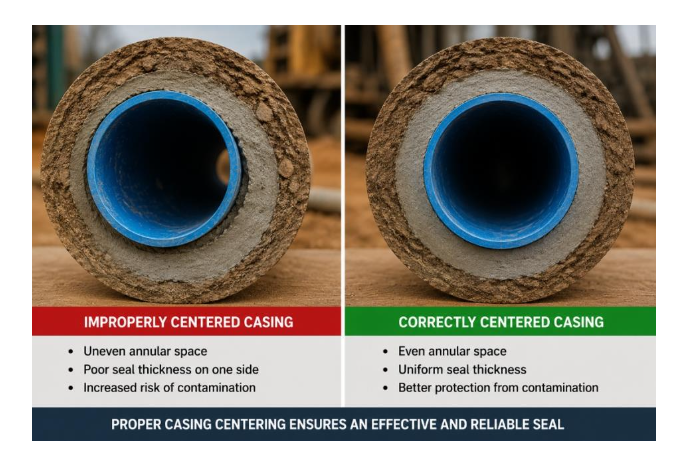
The research documents how poor surface sealing allows surface runoff, shallow contaminated water, and poor-quality aquifer zones to enter the borehole annulus and migrate into groundwater systems. Common failures include insufficient annular space (less than 3 inches for cement grouting), improper casing centralization causing "dead spots," and inadequate supervision during grouting. Despite each country having written standards, enforcement remains inconsistent and penalties for non-compliance are weak.
Why It Matters:
With Africa's population projected to reach 2.4 billion by 2050 and urbanization doubling from 700 million to 1.4 billion people, groundwater dependence will surge. Climate variability increases reliance on boreholes. Yet contamination from industrial, agricultural, and sanitation sources threatens the very resource communities depend on. A single unsealed or poorly sealed borehole becomes a highway for contaminants.
The Technical Solution:
The paper provides detailed guidance on effective sealing: proper annulus sizing, casing centralization at 12.192m intervals using mechanical centralizers, hole conditioning before cementing, and three grout options (neat cement, bentonite chips, or bentonite-cement mix) with specific mixing ratios and placement procedures. Diagrams illustrate correct vs. incorrect casing centering and demonstrate on-site centralizer construction.
Recommendations:
Successful sealing requires planning before drilling begins: specifying seal requirements in procurement documents, training drillers and supervisors, and enforcing standards at the government level. The research argues that groundwater protection starts with the seal—it's the first line of defense against contamination.
Download the full paper for technical specifications, country-by-country regulatory comparisons, detailed diagrams, and implementation recommendations from HydroLOGICA.
We Support Safe Water Access
Learn more about how our team brings fresh water to others with technical excellence and integrity.
Learn More