

Instructional
How to Size a Pump for Community Water Wells in Developing Regions
Publicado el:
March 23, 2026
Written by:
HydroLOGICA
Community water wells in developing regions such as Africa require precise system design to ensure reliable and consistent water service for entire communities. Knowing how to size a pump for community water wells is a critical part of this process, as improper sizing can quickly lead to system inefficiencies and long-term performance issues. Unlike residential wells that serve individual households, community systems must handle significantly higher flow rates, variable demand patterns, and often challenging infrastructure conditions.
Proper pump sizing depends on accurately calculating peak demand flow rates, total dynamic head (TDH), and system pressure requirements to ensure adequate water delivery during maximum usage periods. When teams fail to properly size a pump for community water wells, undersized systems lead to pressure drops and unreliable supply, while oversized systems increase energy consumption, wear, and operational costs unnecessarily.
The sizing process involves evaluating well depth, groundwater conditions, pipe friction losses, elevation changes, and the number of users connected to the system. In rural or remote areas, additional considerations such as unreliable power supply, maintenance capacity, and long-term sustainability must also be factored into the design when planning how to size a pump for community water wells effectively.
Key Takeaways
- Pump sizing must be based on peak demand and total dynamic head to ensure reliable water delivery
- System design should account for well characteristics, distribution losses, and future growth
- Oversized and undersized pumps both create long-term operational challenges
- Projects in developing regions require additional planning for power reliability and maintenance capacity
Key Factors in Sizing a Pump for Community Water Wells
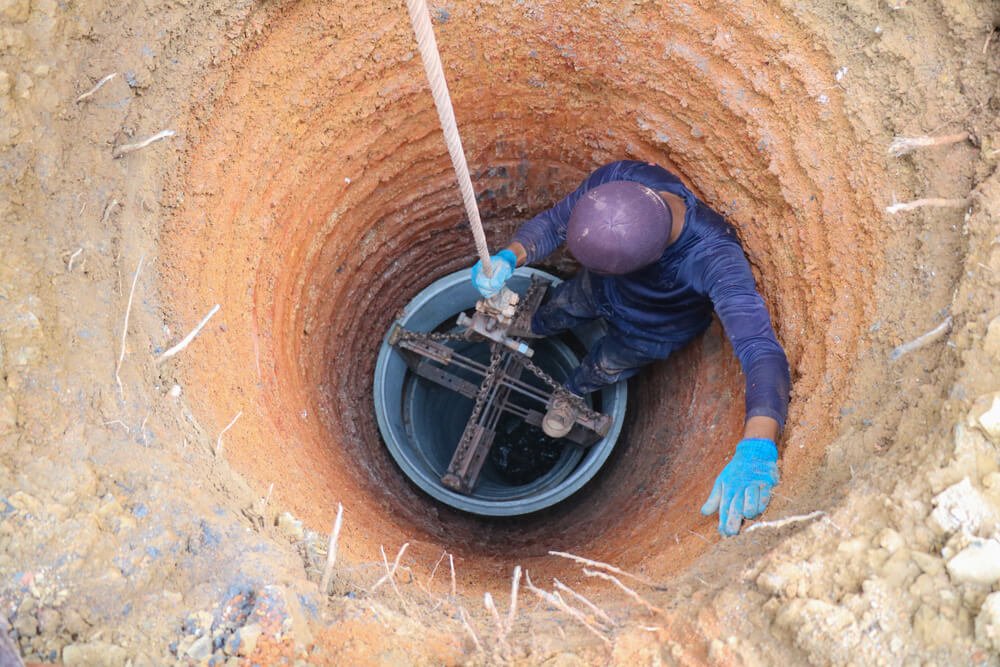
Accurate pump sizing requires a holistic understanding of both technical parameters and real-world operating conditions. Community systems must balance demand, efficiency, and reliability—especially in environments where repairs and replacements are not easily accessible.
Assessing Community Water Demand
Water demand in community systems varies based on population size, usage patterns, and infrastructure availability. While a typical household may use 80–100 gallons per day, community wells must account for simultaneous usage across multiple households and facilities.
Peak demand is the most critical factor. Communities often experience demand spikes that are 2–3 times higher than average consumption, particularly during morning and evening hours.
Key demand considerations include:
- Population size and future growth projections
- Schools, clinics, and commercial users
- Seasonal demand variations (dry vs. rainy seasons)
- Fire protection or emergency supply requirements
Storage tanks can play a major role in system design. With adequate storage, pumps can be sized closer to average demand rather than peak demand—reducing energy consumption and equipment costs.
Understanding Well Characteristics
Well conditions directly influence pump selection and system performance.
Well depth determines the type of pump required:
- Shallow wells may allow surface pumps
- Deeper wells typically require submersible pumps
Static water level indicates the natural groundwater level, while drawdown reflects how far the water level drops during pumping. These values are critical for calculating total dynamic head.
Other important factors include:
- Well diameter (affects pump selection)
- Yield capacity (maximum sustainable pumping rate)
- Groundwater reliability and seasonal variation
- Water quality (affects material selection and maintenance)
In regions with fluctuating groundwater levels, conservative pump placement is essential to prevent dry running and system failure.
Flow Rate and Pressure Requirements
Flow rate must be aligned with both community demand and the well’s sustainable yield.
Typical community systems require:
- 10–50 gallons per minute (GPM) for small to medium communities
- Higher flow rates for larger or institutional systems
Pressure requirements must ensure adequate delivery across the distribution network. Most systems aim to maintain 40–60 PSI at user connections.
Total Dynamic Head (TDH) includes:
- Vertical lift from the pumping water level
- Friction losses in pipes and fittings
- Required system pressure
Accurate TDH calculation is critical for selecting a pump that operates efficiently under real conditions. Incorrect calculations often lead to underperformance or excessive energy use.
Pump Efficiency and Energy Considerations
Energy efficiency is a major factor in long-term system sustainability—especially in regions where electricity is expensive or unreliable.
Key considerations include:
- High-efficiency motors
- Variable frequency drives (VFDs) for demand-based operation
- Compatibility with solar or hybrid power systems
Lifecycle cost analysis is essential. While high-efficiency pumps may have higher upfront costs, they typically reduce operating expenses significantly over 10–20 years.
In off-grid or solar-powered systems, proper pump sizing becomes even more critical. Systems must be matched to available energy supply to avoid underperformance or excessive wear.
Selecting the Right Pump Type and Specification
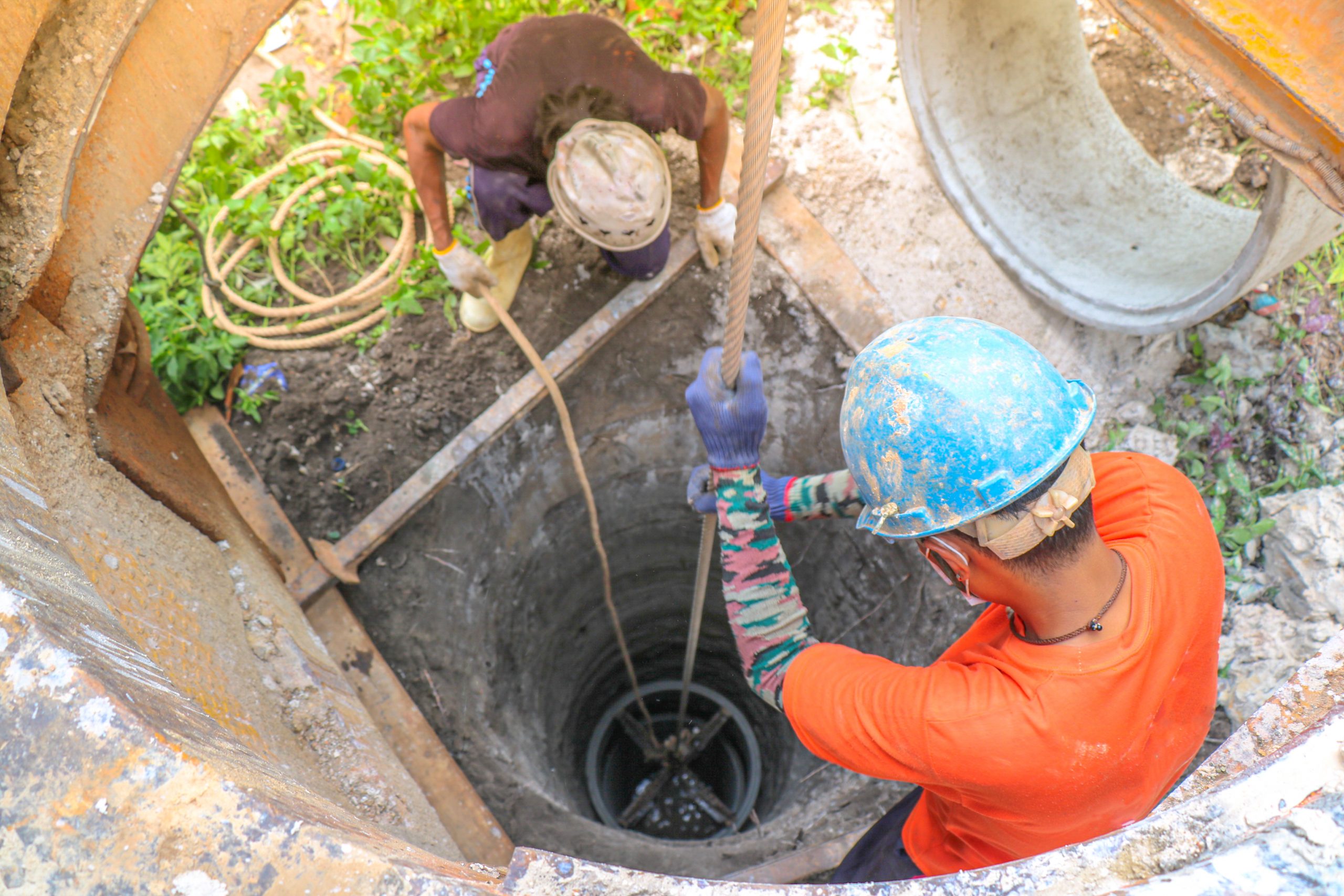
Choosing the correct pump type ensures that the system performs reliably under expected operating conditions.
Overview of Common Pump Types
Submersible pumps
- Most common for community wells
- Installed below water level
- Efficient for deep wells (50–1000+ feet)
- Reliable and low-noise operation
Jet pumps
- Suitable for shallow wells
- Lower upfront cost but less efficient
- Limited depth capability
Deep well jet pumps
- Can operate at moderate depths
- Lower efficiency compared to submersible systems
Turbine pumps
- Designed for high-capacity systems
- Suitable for large-scale or municipal applications
In most community projects in Africa, submersible pumps are the preferred option due to efficiency and reliability.
Matching Pump Curves to System Needs
Pump curves illustrate the relationship between flow rate and head pressure. The goal is to select a pump that operates close to its best efficiency point (BEP) under expected conditions.
System head includes:
- Static lift
- Friction losses
- Pressure requirements
Pumps should ideally operate at 75–85% efficiency at the design point. Oversizing or undersizing reduces efficiency and shortens equipment lifespan.
Design should also account for:
- Seasonal changes in water levels
- Variations in demand
- Future system expansion
Ensuring Reliable Pump Operation
Reliable operation depends on both proper sizing and supporting system design.
Key factors include:
- Motor sizing with appropriate safety margins
- Protection systems (dry-run protection, overload protection)
- Stable power supply or backup systems
- Proper installation and cooling conditions
Control systems such as pressure switches and water level sensors help maintain consistent operation and prevent damage.
Regular maintenance is essential:
- Monitor flow rates and pressure
- Track energy consumption
- Inspect electrical components
- Replace worn parts proactively
In remote or resource-limited areas, systems should be designed for simplicity and durability, reducing reliance on specialized maintenance.
Why Pump Sizing Is Where Many Projects Go Wrong?
One of the most common causes of underperforming water well systems is improper pump sizing. Many project teams underestimate the importance of knowing how to size a pump for community water wells, which leads to systems that are not correctly matched to demand and well conditions. As a result, projects often experience low pressure, inconsistent supply, or premature equipment failure—issues that are difficult and costly to fix after installation.
This challenge is especially common in community projects across Africa where limited data, tight budgets, and logistical constraints can lead to design shortcuts or incorrect assumptions when trying to size a pump for community water wells effectively.
HydroLOGICA works with organizations at the planning and design stage to ensure that systems are sized correctly from the beginning. By combining hydrogeological analysis with practical field experience, they help teams avoid oversizing, undersizing, and mismatched system components that can compromise performance.
Beyond design, HydroLOGICA also focuses on training local teams to understand how pump sizing impacts long-term operation. This ensures that systems are not only installed correctly but can also be maintained and adapted as community needs evolve.
Getting pump sizing right at the start is one of the most effective ways to improve system reliability, reduce costs, and ensure consistent water access over time.
Apoyamos el acceso a agua segura
Descubra cómo nuestro equipo lleva agua potable a otras personas con excelencia técnica e integridad.
Más información
